Christian Unity
BUILDING BRIDGES FOR A GREATER WITNESS IN THE WORLD.
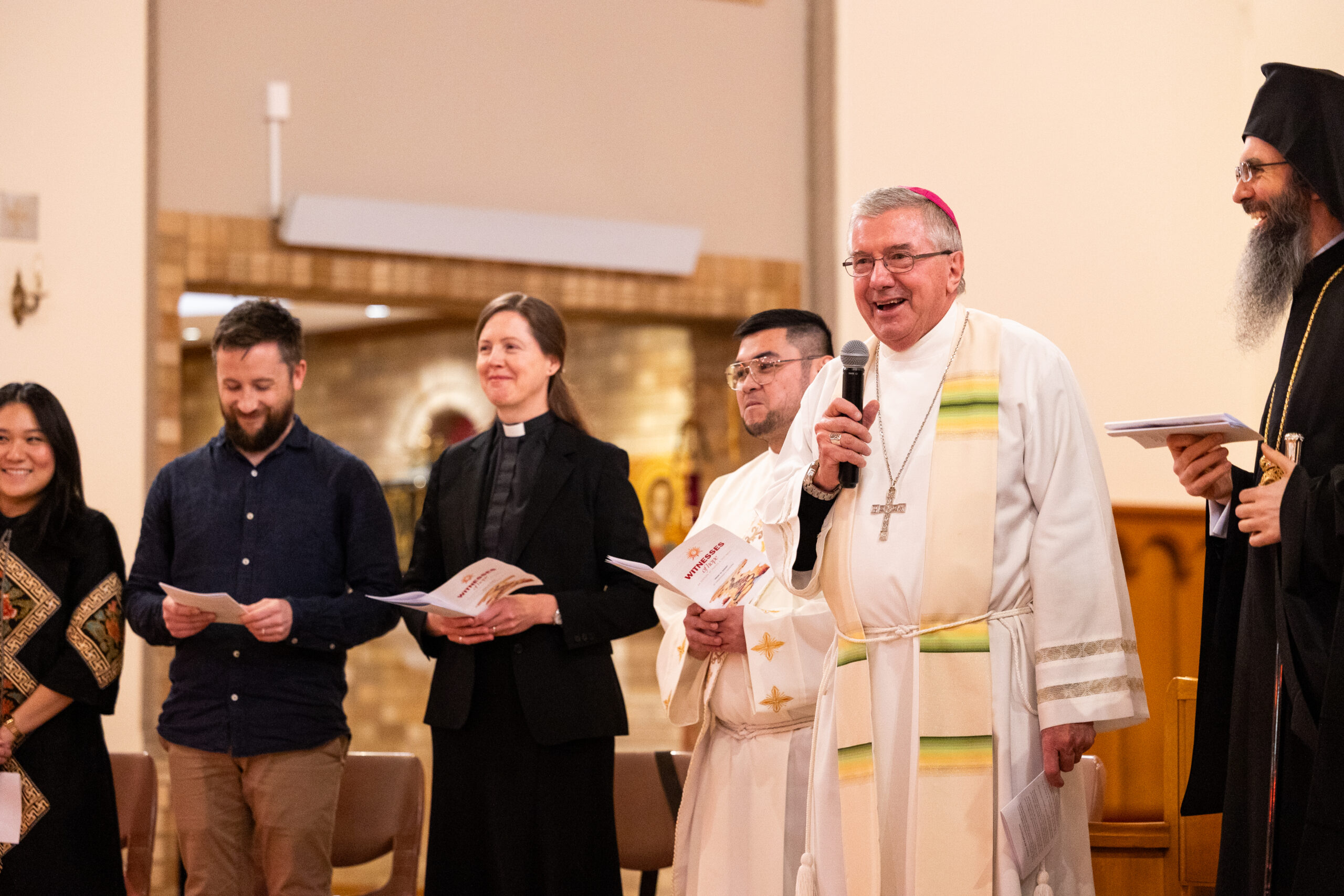
Ecumenism is more than dialogue between churches; it is a shared journey of discipleship. At its heart is the conviction that Christians are stronger together when we learn from one another, pray with one another, and work alongside one another in service of Christ’s mission.
In a world often marked by division and isolation, Christian unity offers a powerful witness to the reconciling love of God. By building relationships across traditions, we create new opportunities for encounter, collaboration, and a deeper appreciation of the gifts God has given to the whole Church. In essence, we are invited to be with Jesus, be like Jesus, and do what Jesus did, together.
Christian unity lies at the heart of Christ’s prayer for the Church: “that they may all be one… so that the world may believe” (John 17:21). The pursuit of unity is therefore not an optional activity but an essential part of the Church’s identity and mission.
The Second Vatican Council affirmed that working for unity among Christians is a central concern of the Church. It recognised that the Holy Spirit is at work beyond the visible boundaries of the Catholic Church and that Christians already share a real, though imperfect, communion through baptism.
Our Vision for Unity
Our vision for Christian Unity in the Archdiocese is to cultivate meaningful relationships between Christians that lead to a deeper encounter with Christ, growth in discipleship, and participation in God’s mission.
By the grace of the Holy Spirit, we are pursuing opportunities for prayer, dialogue, formation, and shared service and outreach, seeking to strengthen the bonds that unite us and to give a more credible and compelling witness to the Gospel in our communities and across society.

Encounter
Creating opportunities for Christians to build authentic relationships through prayer, dialogue, hospitality, and shared experiences. By fostering meaningful encounters across traditions, we cultivate mutual understanding, deepen trust, and discover the many gifts God has placed within the wider Christian family.
Discipleship
Growing together as followers of Jesus through shared prayer, formation, learning, and witness. By creating spaces where Christians can learn from one another’s faith, experience, and traditions, we encourage deeper discipleship and a renewed commitment to living and proclaiming the Gospel.
Mission
Working together to offer a more visible and compelling witness to Christ in the world. Through collaboration in evangelisation, service, advocacy, and community engagement, Christians can respond to the needs of our time and demonstrate the hope, unity, and transforming love found in Jesus Christ.

The way of ecumenism is the way of the Church.
St John Paul II, Ut Unum Sint §7

RECENT UPDATES



Some Frequently Asked Questions
The word ecumenism comes from the Greek oikoumenē, meaning “the whole inhabited world.” In its original use, it referred to the universal scope of the Church’s mission. In modern usage, it refers to the Church’s commitment to the restoration of full visible unity among all Christians. The term is now used to describe the prayer, dialogue, and practical efforts by which Christians seek to heal divisions and grow in communion in response to Christ’s will “that they may all be one” (John 17:21).
The terms ecumenism and Christian unity are often used interchangeably, as both refer to the Church’s commitment to the visible unity of all Christians. In this sense, “Christian unity” names the goal, while “ecumenism” describes the Church’s active response and ongoing work in pursuing that goal.
The Catholic Church recognises that all who are baptised in Christ are truly joined to him and share a real, though imperfect, communion with the Church. Ecumenical work therefore seeks to deepen this communion, removing obstacles to full unity through prayer, dialogue, conversion of heart, and faithful witness to the truth of the Gospel.
The Catholic Church understands Christian unity to be at the heart of Christ’s will for his Church. The Second Vatican Council taught that division among Christians weakens the Church’s witness and obscures the Gospel. Working towards unity is therefore not optional, but an essential part of the Church’s mission.
No. The authentic pursuit of ecumenism must be grounded in truth and charity. The Catholic Church remains faithful to the fullness of faith she has received while engaging other Christians with respect, honesty, and openness. Ecumenism seeks greater unity in Christ, not the abandonment of what has been revealed through Scripture and Tradition as safeguarded by the Magisterium of the Church.
Key sources for the Catholic Church’s teaching on ecumenism include the documents of the Second Vatican Council, especially Unitatis Redintegratio (1964), which sets out the Church’s foundational commitment to Christian unity and its theological basis. This should be read alongside Lumen Gentium (1964), particularly paragraphs 8 and 15, which explain the Church’s understanding of full communion and the relationship of other Christians to the Catholic Church.
The Catechism of the Catholic Church also provides a clear summary, especially paragraphs 813–822 on the unity of the Church and 820–822 on ecumenism.
Further important guidance is found in the Directory for the Application of Principles and Norms on Ecumenism (1993), which offers practical norms for ecumenical engagement.
More recent teaching, including Saint John Paul II’s Ut Unum Sint (1995), continues to develop the Church’s ecumenical vision and invites ongoing prayer and dialogue for the restoration of full visible unity among all Christians.
Christian unity begins with a willingness to build relationships with other Christian communities and organisations. Parishes can foster these relationships through prayer, dialogue, and shared mission. Practical initiatives might include participating in the Week of Prayer for Christian Unity, hosting ecumenical prayer services, collaborating on community outreach projects, supporting local ministerial associations, and creating opportunities for Christians to learn from one another. Even small acts of hospitality and friendship can become important steps towards the unity Christ desires for his Church.